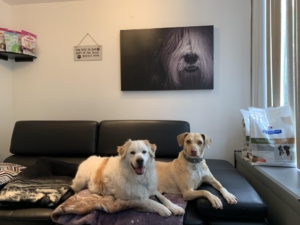

“If I would have recommended it for my own pet, why would I not offer it to my patients? It’s a great tool to help control pain, and other ailments in pets.” ~ Dr. Tasha Wilson
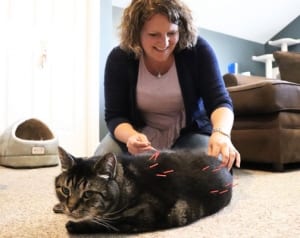 In 2016, my mom (Dr. Wilson) became certified in Medical Acupuncture at Colorado State University. This evidence-based modality allows her to provide adjunctive therapies to pet patients like me. I know the needles look a little frightening, but there’s no need to worry. It doesn’t hurt. I can barely even feel it! The needles are actually as thin as hair.
Sometimes I even fall asleep while she is giving me treatment because I am so relaxed. Plus, those little needles are very helpful for pets who have injuries and/or diseases that cause them pain.
What is Acupuncture?
So, you might be wondering, what is this strange treatment, called acupuncture? The “official” definition of acupuncture is that it is a therapeutic treatment method that involves the insertion of sterile needles to prevent and treat injuries and disease. But, how does it work? And, why would a pet like me need to have it?
Traditional Vs. Western Acupuncture
Let me start by explaining the two main ways of using acupuncture:
- Traditional / Chinese / Eastern Acupuncture
Acupuncture originated in China long, long ago. Traditional / Chinese / eastern acupuncture focuses on restoring a patient’s energy flow, called qi, but it is pronounced, “chee”. Here’s a more scientific explanation, according to John Hopkins Medicine:
“Traditional Chinese medicine practitioners believe the human body has more than 2,000 acupuncture points connected by pathways or meridians. These pathways create an energy flow (Qi, pronounced “chee”) through the body that is responsible for overall health. Disruption of the energy flow can cause disease. By applying acupuncture to certain points, it is thought to improve the flow of Qi, thereby improving health.”
- Western / Medical Acupuncture
Western/medical acupuncture is based on traditional Chinese acupuncture, but it is a more contemporary, evidence-based version of the practice. It uses our current knowledge of anatomy and physiology and how it relates the disease to establish the points used in treatment. With western/medical acupuncture, a diagnosis is established first, and acupuncture is used as one method of treatment.
Which is Better?
My mom says that neither practice is necessarily better than the other. She said that many practitioners use a combination of both when treating a patient. She cited an article from Mosher Health, which stated, “We need both western and Chinese medicine. The sooner we integrate both into a universal approach to healing and treatment, the healthier and wiser we will all be.” I agree!
What are Acupuncture Points?
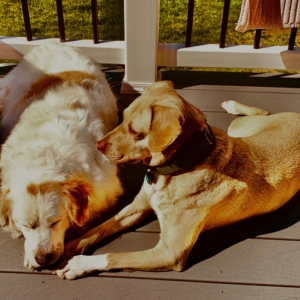
Scientists and researchers say that acupuncture points can stimulate the central nervous system. As a result, chemicals are released into the body’s muscles, spinal cord, and brain, which is believed to restore the body’s natural healing abilities, helping to restore physical and emotional health. which helps to increase physical and emotional health. This is true for both humans and pets, like my BFF, Hazel, and I.
Each acupuncture point corresponds to a particular area of the body. So, if a dog like me is feeling pain in his/her foot, there is a spot on the body where, if one or more of those tiny needles is placed, it can help me (or you!) feel better.
When choosing points for acupuncture, my mom says she looks at the disease process and thinks,
“What nerves and blood vessels go to that area, such as the hips, or to a specific organ? I want to increase blood flow, and decrease inflammation. What can I do to decrease the muscle tension in that area? What area can I target to counteract the heightened nerve response that is occurring right now?”
Then, she targets the specific acupuncture points that work with those particular nerve pathways and with those specific blood vessels. Pretty cool, right?
How Does Acupuncture Help?
Acupuncture does many great things for your body – whether you’re a human, like my mom, or a pet, like me.
-
It decreases pain.
One of the most common uses of acupuncture is pain management. If your pet is experiencing pain due to surgery, injury, or chronic disease, your veterinarian may recommend acupuncture to help with the pain. Why? Because acupuncture helps to stimulate the natural production of substances in the body that decrease pain.
For example, cytokines are proteins secreted by the immune system. Certain cytokines promote an inflammatory response, and acupuncture reduces the cytokines that increase inflammation. It also increases those that inhibit inflammation, activating a natural way the body can decrease pain, and helping to get the nervous system back on track.
When an animal like me has chronic pain, the nerves start becoming dysfunctional and don’t work as they should. When the nerves aren’t working properly, they can become “ramped up”, and even when the painful stimulus is gone, the animal may still feel the same amount of pain. Acupuncture helps to “unwind” the nervous system and release muscle tension, so the animal’s pain level is better controlled and the nervous system becomes “more normal”.
For best results, my mom says acupuncture is often used in combination with other types of treatments to decrease pain in pets.
-
It can help improve cartilage health.
Acupuncture helps to release various growth factors, including but not limited to ones that help cartilage become healthy again. There is a lot of data showing that once cartilage is dead (which can happen in joint disease), it will never be healthy again. However, my mom said there are more and more studies (like this one) showing that acupuncture can actually help with that.
-
It helps to release anti-inflammatory substances in the body.
According to the following research study, “Acupuncture can promote the release of anti-inflammatory and analgesic substances (opioid peptides, adenosine, dopamine, and endogenous Cannabinoids [7–9]) and inhibit the release of proinflammatory factors (5-hydroxytryptamine, histamine, substance P, nerve growth factor, CGRP, and TRPV1 [10–12]) to produce an *analgesic effect.” The word “analgesic” means “acting to relieve pain”, which further supports #1, above.
Again, acupuncture helps facilitate a natural way the body can heal itself.
-
It can help to heal the body in many ways.
Pets with arthritis, hip dysplasia, disc disease, and/or other nerve injuries can benefit greatly from acupuncture. It is often used after an injury is repaired and a pet is going through rehabilitation and helps to improve the healing process.
Acupuncture can also help pets with skin problems like allergic dermatitis and hot spots by increasing circulation in the affected areas, which helps to improve the healing process, and by reducing pain, which minimizes a pet’s tendency to over-groom or itch an affected area.
It can even help with gastrointestinal issues like diarrhea and nausea, as increased blood circulation helps to regulate the digestive system. Acupuncture is also known to help animals with respiratory problems like asthma or allergies, due to its anti-inflammatory effects and immune system benefits.
When the body has a disease, such as kidney or heart disease, inflammation occurs as a result. This can cause these diseases to worsen. Acupuncture helps decrease the inflammation secondary to the disease, helping the organs function better. My mom has even seen kidney values decrease with acupuncture! See this study here: https://pubmed.ncbi.nlm.nih.gov/28422526/.
-
There are minimal – if any – side effects.
 Aside from all of the wonderful things about acupuncture listed above, the thing that I love about acupuncture (and my mom does, too) is that the risk of side effects from properly administered acupuncture are extremely low. When done by a doctor like my mom, with the right training, certification, and experience, most pets won’t feel much at all. Sometimes I feel a tingling sensation, and other pets may feel a slight numbness in the area being treated, but that’s it!
There are many treatments out there for different symptoms, with potential side effects far worse than the initial cause for treatment. Acupuncture is really just about making four-legged creatures like us feel better.
Results & Treatment Length
Dr. Wilson (my mom) starts with a total of 6 sessions to start and then works with the pet parent to determine an ongoing treatment plan if that’s what you and your owner decide. If your pet has chronic problems, the initial frequency of sessions might be higher than others and may be needed for a longer period of time, while temporary or short-term pain or illnesses are likely to be resolved more quickly. It all depends on the pet and their particular symptoms and needs.
According to Clinician’s Brief,
“Patients that are likely to respond favorably to acupuncture usually do so within the first few treatments; however, at first the benefits may last only 1 to 2 days. The goal is to build a cumulative and longer-lasting effect by delivering frequent sessions at the outset. Once a satisfactory level of improvement occurs, the acupuncturist will usually increase the time interval between sessions to that which allows sustained improvement with the fewest treatments.”
Your First Appointment
At your first appointment, Dr. Wilson will discuss your pet’s history and the disease process with you. It’s important to provide her with as much information as possible about what supplements and medications you are taking, along with any past illnesses or injuries. She will also perform myofascial palpation, which helps her to assess trigger points and muscle tension, which she targets during treatment.
Acupuncture is science-based, and Dr. Wilson has read multiple case reports and scientific studies showing the benefits of acupuncture – from the microscopic changes to the changes owners see in their pets. She values integrative medicine. and focuses on the patient as a whole, treating not only the symptoms but the cause. Her end goal is always “making better tomorrows for your pet.”
Pets Dr. Wilson Has Helped
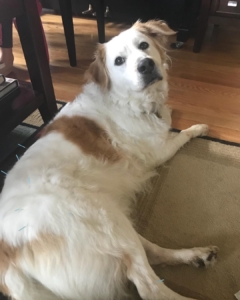
Because acupuncture can do so many good things for pets like me, I get regular acupuncture treatments. My mom uses it as a preventative treatment for me. It also helps to decrease any muscle tension I get after I’ve been running around like crazy, doing acrobatics with my BFF, Hazel. Plus, it helps keep the cartilage healthy in my knees, which is especially important, since I had a TPLO operation, and my other knee is more prone to cruciate disease because of it.
But, I’m not the only one who has benefited from acupuncture. My mom helps tons of pets feel better. Here are a few of my four-legged friends she has helped:
Zoey

A dog who was paralyzed and now can walk!
>>Watch the Video (Part 1)
>>Watch the Video (Part 2)
Waldo
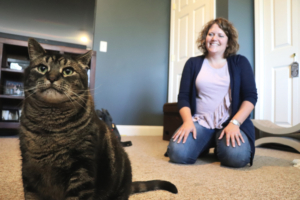
A cat with chronic arthritis that receives regular acupuncture for pain.
>>Read the Article on Fosters.com
Cooper
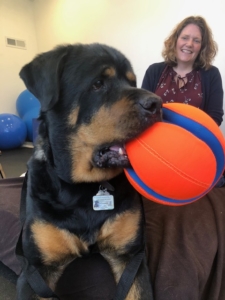
A dog with bilateral cruciate disease who benefits from regular acupuncture and rehab.
>>Watch the Video
Schedule an acupuncture consultation with Dr. Wilson today, and get your pet’s tail wagging again!
Your Friends,
Jenkins & Hazel